Independent build · Beta
Platestead: a restaurant's own online ordering, standalone or with Square or Clover.
A branded ordering site for guests and an admin for staff. Guests order for pickup and pay by card or at the counter; the order reaches the kitchen through the admin or the restaurant's POS. Prayantr's own build, in beta: sandbox-validated, with no restaurant live on it yet.
See the product
Three demonstrations you can open now.
Two fictional restaurants you can order from with a test card, and a simulated admin you can click through. They are separate demonstrations: an order placed on a storefront does not appear in the simulated admin.
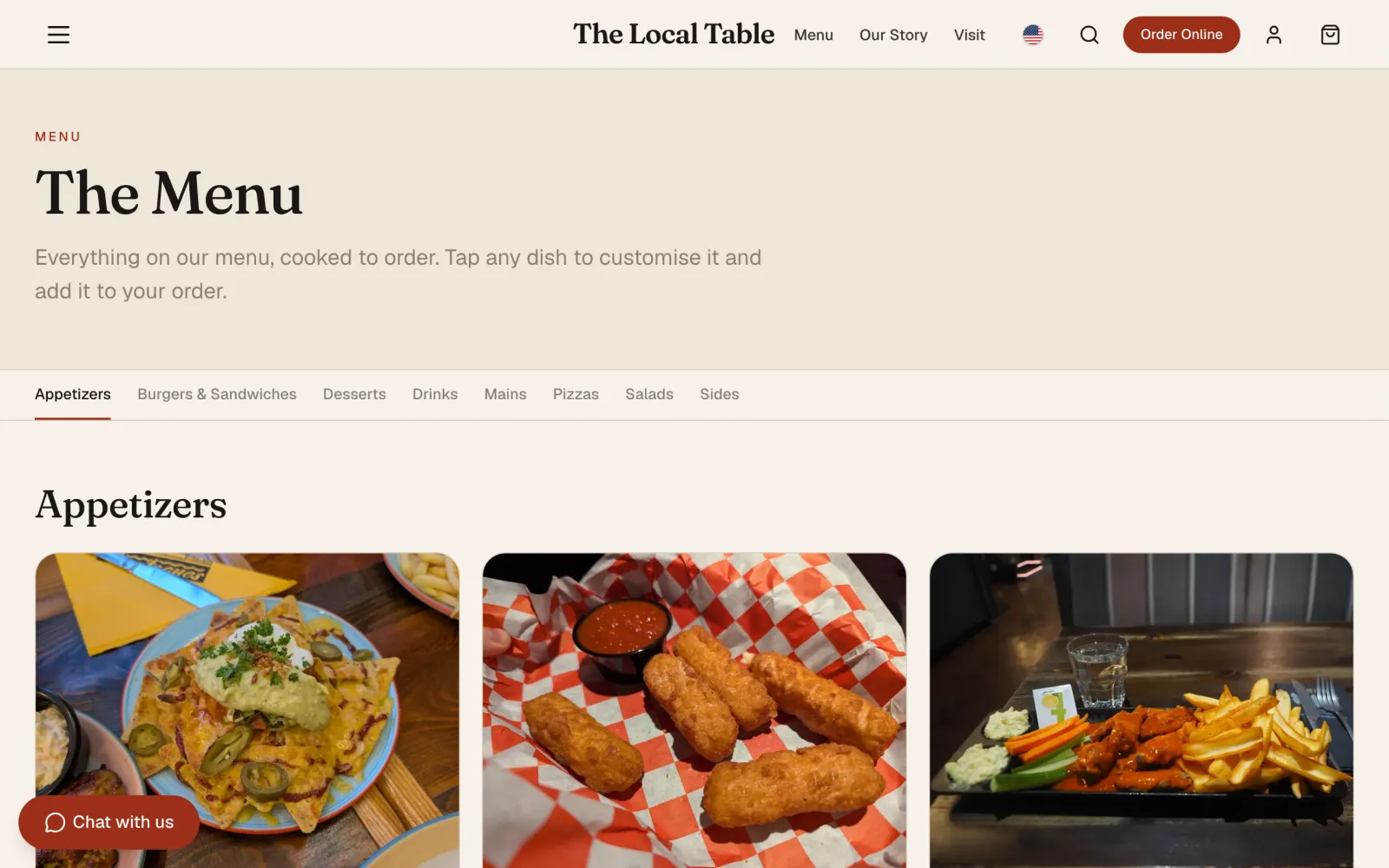
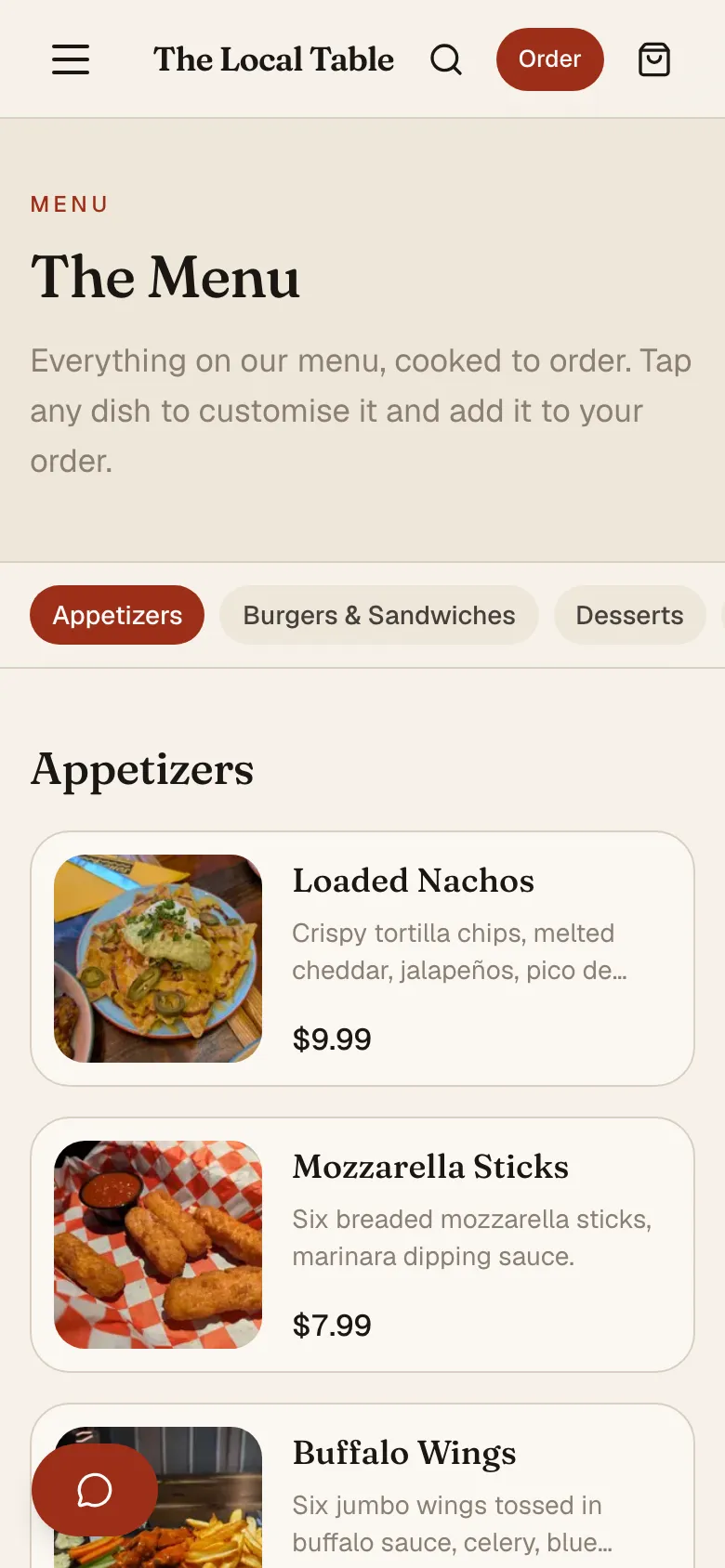
The Local Table
A storefront connected to a Square sandbox account. Browse the menu, open a dish, choose options and walk through checkout.
Fictional restaurant · test payments only
Open the storefront
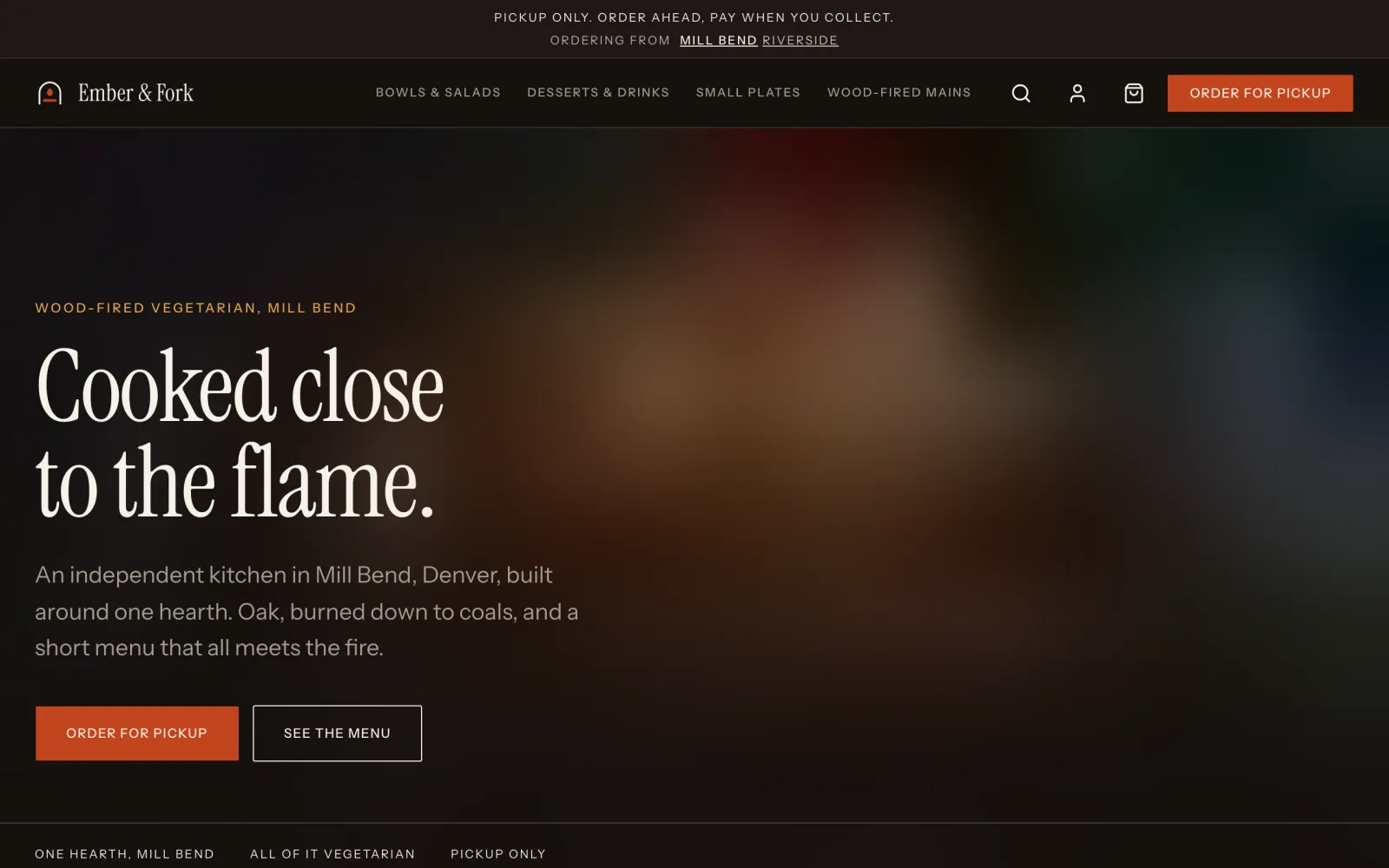
Ember & Fork
One brand with two units, each with its own menu, prices and stock, connected to a Clover sandbox account. Pickup only. Switch units at the top and watch the menu change.
Fictional restaurant · test payments only
Open the storefront
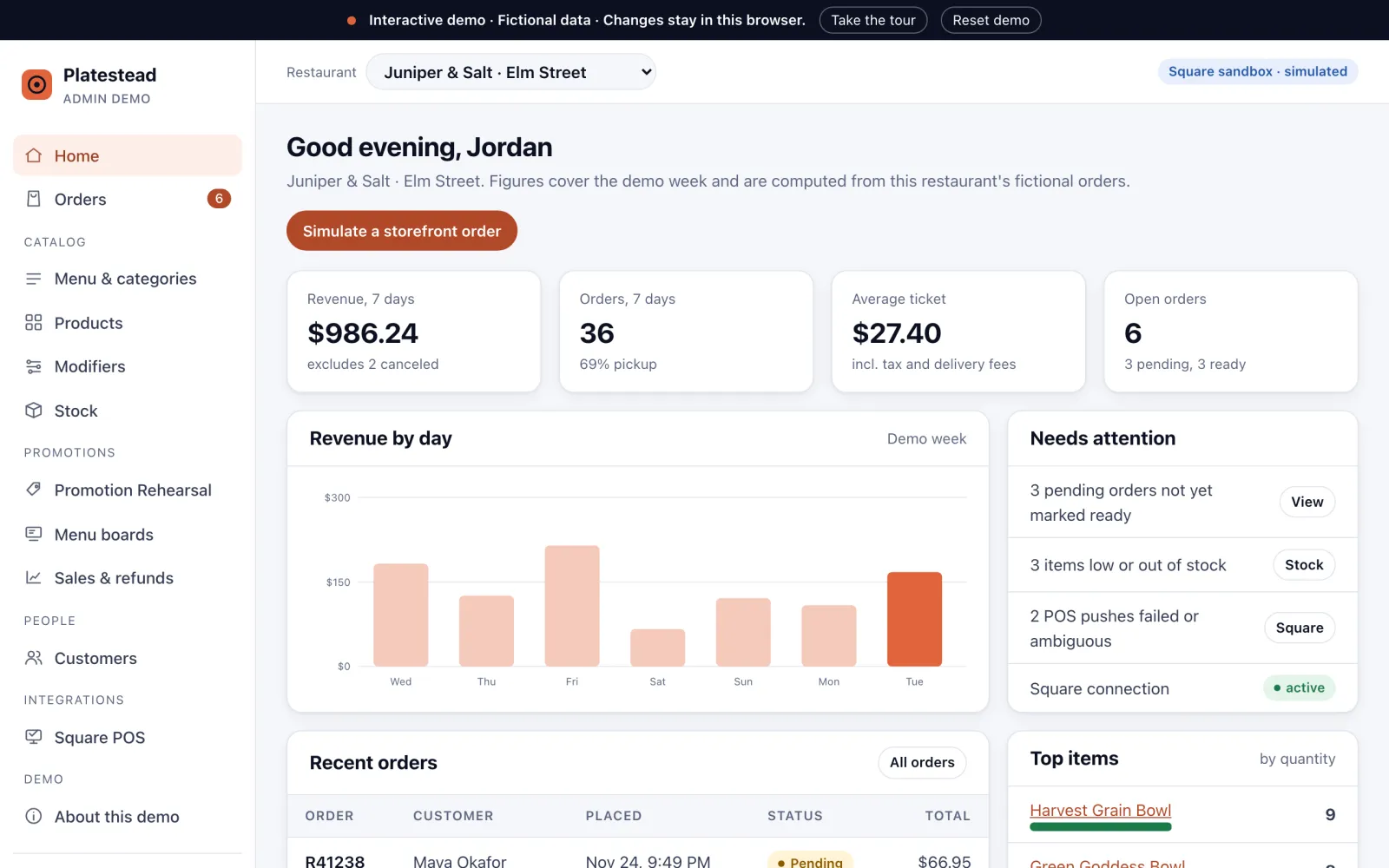
The staff admin preview
Orders, menu, stock, customers and POS status across two units. Take the guided tour, mark an order ready, or simulate a new order arriving.
Browser-only simulation · fictional data
Open the admin preview
On the storefronts only test cards work and nothing is cooked; an order confirmation goes to whatever email address you enter. The chat assistant on The Local Table is not part of the beta offer. The admin preview runs entirely in your browser and contacts no POS, payment provider or server.
An example order
From the guest's phone to the kitchen.
What the guest does
Browses the restaurant's own menu
Categories, dish pages and photos under the restaurant's name and web address, not inside a marketplace.
Chooses options
Sizes, add-ons and limits such as "choose up to five" are enforced on the dish page.
Checks out for pickup
Pays by card, or chooses to pay at pickup. On the demonstrations card payment runs in Stripe test mode.
Gets a confirmation
By email, once the order is placed.
What staff see
The order arrives
In the admin and, when a POS is connected, as a ticket in Clover, or in Square for paid orders.
They prepare it and mark it ready
Then picked up. A pay-at-pickup order shows the balance due until it is collected.
One menu to maintain
With a POS, the menu and stock counts come from the POS, so staff do not keep a second menu.
Problems are surfaced
An order that could not be confirmed in the POS is flagged for a person instead of being sent twice.
Three ways to run it
Without a POS, with Square, or with Clover.
Without a POS
Orders and payment run in Platestead, and staff work from the admin. Card payment on the restaurant's own Stripe account, or pay at pickup.
Built and tested in Stripe test mode · not yet deployed
With Square
The menu and stock counts are imported from Square, and each paid order is sent to Square as a ticket.
Running on a demo with a Square sandbox account · needs our Square production setup before a live restaurant
With Clover
The menu is imported from Clover and orders are sent to Clover, with duplicate protection built around Clover's own behaviour. Pay at pickup, with card payment subject to Clover's review.
Running on a demo with a Clover sandbox account · needs Clover's approval of our app, which we do not have yet; how card payment works with Clover is confirmed in that review
Each restaurant runs as its own deployment with its own database, and each deployment connects to one POS.
Capabilities and availability
What exists today, and where each part stands.
| Capability | Where it stands |
|---|---|
| Branded storefront, menu, dish options, cart and checkout | Running on both demonstration storefronts |
| Pickup ordering, pay at pickup | Running on both demonstrations |
| Card payment | Stripe test mode on the demonstrations. Without a POS or with Square, live payments would run on the restaurant's own Stripe account. With Clover, how card payment works is subject to Clover's review of our app |
| Square and Clover: menu import and order sending | Running on the demonstrations against sandbox accounts. No live merchant yet |
| Several units with separate menus, prices and stock | Running on Ember & Fork (two units) |
| Running without a POS | Built and tested in Stripe test mode. Not yet deployed |
| Courier delivery | Tested in courier sandboxes in August 2026: a full delivery on Uber Direct, and only the cancellation path on DoorDash. Not part of the current beta |
| Loyalty | In the codebase, never used by a restaurant. Not offered |
| Cancellations and refunds sent to the POS; order status back from the POS | Not built. Staff repeat a cancellation or refund in the POS, and the admin reminds them |
In development, shown as a preview
Planning a promotion before running it.
Promotion Rehearsal lets a restaurant plan an offer against running no promotion: set a quantity limit, approve it for a service window, publish it to menu boards and later compare imported POS sales and refunds with the plan. It runs on a demonstration restaurant with fictional data, and you can try a simulated version in the admin preview (choose "Explore promotions").
- The sales and refund import was checked against a Square sandbox account in November 2026. It has not been run against Clover.
- Menu boards are published from the same plan. In the public preview the screens are simulated.
- It is a planning aid. It makes no promise about sales or profit, and it is not part of the current ordering beta.
Engineering depth
Built so the integrations fail safely.
The part of this build most relevant to other integration work: what happens when events repeat, arrive late or cannot be trusted.
One order, one POS ticket
Square accepts fixed idempotency keys. Clover has none, so the adapter looks the order up before creating it and marks an unclear result for a person. Idempotent per order by design, not a promise of exactly-once delivery.
Sandbox-validated
Webhooks are checked, not trusted
Square's signature is verified. Clover's notifications prove nothing about the sender, so the real state is fetched again with that merchant's own access.
Sandbox-validated
One codebase, separate restaurants
Each brand has its own deployment, database and settings. One brand runs two units with separate menus, prices and stock.
Demo deployments
Architecture: one integration core, thin adapters
Square was integrated first. When Clover arrived, the shared machinery was extracted into a provider-neutral core and Square moved onto it, so Clover was written against the same seams rather than beside the first.
- The core owns the state: connections with encrypted credentials, mapped locations, external references, de-duplicated webhook events, catalog sync, order push and a nightly reconciliation.
- Adapters own the protocol: each translates one provider's authentication, payloads and errors. The core has no provider-specific branches.
- One catalog source per store, enforced in the model and by a database constraint.
- Outbound writes ship switched off and are enabled as an explicit, audited step. Stock write-back to Clover is built and left off.
The abstraction stops where the providers genuinely differ: duplicate protection and webhook trust are handled per provider, because pretending they behave alike is how an integration duplicates writes or trusts a forged payload.
Hard problems: duplicates, webhooks, syncs and tokens
An order must reach the POS once, even when events repeat
Square accepts deterministic idempotency keys, so a re-push returns the same order. Clover has none, so the adapter looks the order up by external reference before creating it, adopts a half-finished one, and marks the result ambiguous for a person to decide when it cannot tell. A per-order lock and a sweep for stuck pushes cover manual re-pushes and killed workers. Every push ends as succeeded, failed or ambiguous. This is idempotent per order by design, not a promise of exactly-once delivery.
Adopt-on-retry has been checked on one Clover sandbox order, and the lock against a regression test that fails without it. The same evidence labels for every connected system are on the integrations page.
Webhooks are not all equally trustworthy
Square signs each request, and the adapter verifies the signature and de-duplicates by event id. Clover's webhooks carry a shared code that proves nothing about which merchant sent them, so they are treated as untrusted notifications: the adapter re-fetches the real state with that merchant's own credential. In a sandbox test, a payload claiming a stock count of 999 produced Clover's actual count. Delayed events were also accepted and applied rather than dropped.
A sync must not delete on partial data
The menu flows from the POS into the storefront. An item is archived as deleted only after the provider's full listing has been read, and a sync that would remove more than a quarter of the catalog is held for a person instead. Removed items are archived, not destroyed. The deletion path and the guard were exercised against the Square sandbox.
Tokens that expire on different clocks
Square tokens last about 30 days; Clover's last about 30 minutes and rotate on every refresh. A Clover refresh that had never actually run only surfaced when a real sandbox token reached its refresh window. It was fixed and then verified on the real clock. That class of defect is why this build was checked against live sandboxes and not only against mocks.
Release discipline: guardrails that refuse
- Ancestry-checked deploys: a build whose history does not contain what is running now is refused, so a stale branch cannot quietly roll a deployment back.
- Tenant checks: configuration must name only its own brand, and secret files must be locked down.
- A pre-deploy gate: a verified backup, no pending outbound pushes, and clean tests and security scan.
- Rollback targets: the previous image stays available, so rollback does not need a rebuild.
Part of this came from a failure: an early cutover stopped at a post-deploy check, was rolled back with no data changed, and the root cause (test doubles shaped like the bug rather than like the real SDK) was fixed with specs built from real, sanitised responses.
Nightly backups are kept on one machine, by decision, because the build holds no customer data. Some monitoring alerts are recorded as open work, not implied.
Evidence table: what was checked, and how
| Area | Status | How it was checked |
|---|---|---|
| Catalog sync, order push, token refresh (Square and Clover) | Sandbox-validated | Sandbox accounts and automated tests |
| Delivery dispatch | Uber Direct lifecycle exercised; DoorDash cancellation path only | Courier sandbox and test accounts, August 2026 |
| Sales and refund import (Promotion Rehearsal) | Square sandbox only | Read-only import, November 2026; repeat import made no duplicates |
| Stock write-back to Clover | Built, switched off | - |
| Real merchant or customer traffic | None | Every order is a test order |
| Card payments | Stripe test mode | Not live payments |
| No-POS configuration and newer payment handling | Tested locally, not deployed | Automated tests and Stripe test mode; staging checks still pending |
Built on Ruby on Rails and PostgreSQL (Spree Commerce) with a modern JavaScript storefront, with AI coding agents doing much of the implementation under the principal's direction and review. A shorter write-up is on amitsolanki.com, and Platestead's own site is platestead.com.
Run a restaurant? Start with a fit check.
Tell us your POS (none, Square or Clover) and what you want from your own ordering site. If Square's or Clover's built-in ordering already does the job, we will say so. Current beta terms are on the Cyber Week offers page.