PrayantrSpree development
Service
Spree Commerce development, without forking the core.
Prayantr implements Spree Commerce stores and builds the custom workflows, extensions and integrations around them, so your changes survive the next release.
The problem
The store works, until you need it to work your way.
Spree gives you an open-source commerce platform on Ruby on Rails that you can change. The hard part is changing it without making the next upgrade impossible: a checkout rule only your business has, an order that has to reach another system once and only once, a loyalty scheme, a catalog your staff should not maintain twice.
Prayantr builds that kind of work as Spree extensions and separate services rather than edits to Spree's core, so your customisations can be checked against each new release instead of untangled from it.
What we do
Four kinds of Spree work.
Implementation
Spree's community edition installed on your hosting: one store and currency, products and tax set up from your spreadsheet, up to an agreed number of products, one payment provider in test mode and then live under your own account, one shipping method, and one purchase flow verified from browse to admin view.
Custom workflows and extensions
A specified feature, such as a checkout rule, an admin report or a loyalty scheme, built as an extension with automated tests and written acceptance criteria.
Integrations
Payment, shipping, fulfilment and back-office connections built to handle retries: duplicate protection, webhook checks and a recorded outcome for each push. Provider calls are verified in their sandboxes before anything goes live.
Upgrade assessment and maintenance
A read-only assessment of one Spree application: its versions, extensions and customisations checked against the release you are aiming for and the official upgrade guides, ending in a written report with a staged path and an estimate per stage. Ongoing patch review is available afterwards on a bounded monthly basis.
Evidence
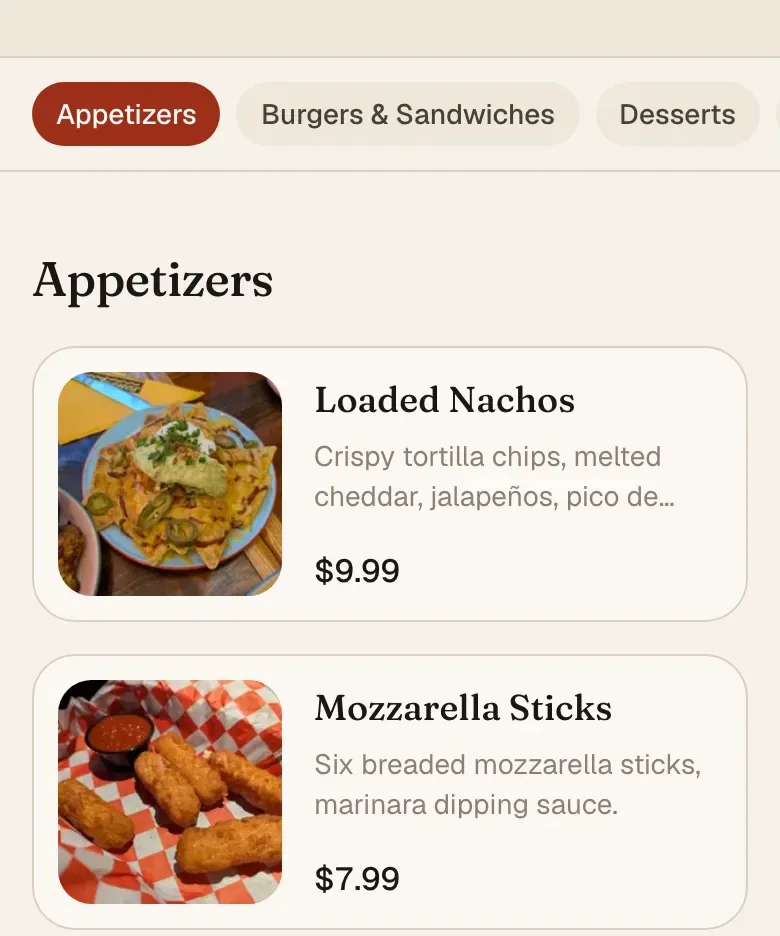
Platestead, our own platform on Spree.
Independent build Sandbox-validated
Platestead, our own ordering platform for restaurants, runs on Spree Commerce 5.6 and Ruby on Rails 8.1 (5.6.1 and 8.1.4.1 in its dependency lockfile on 16 November 2026). It shows what a Spree build can look like when the storefront, admin and integrations are shaped around one kind of business. We built Spree extensions for point-of-sale sync, delivery quotes and dispatch, loyalty and catalog Q&A; the delivery, loyalty and catalog Q&A extensions are published as open source.
| Extension area | Status | How far it is proven |
|---|---|---|
| Point-of-sale sync (Square and Clover) | Custom integration in Platestead | Demonstrated against Square and Clover sandbox accounts; no real merchant yet. |
| Delivery: Uber Direct | Published, MIT | Quotes, dispatch and status updates exercised against Uber's sandbox; inbound webhooks not tested live. |
| Delivery: DoorDash Drive | Published, MIT | Sandbox quotes; only the cancellation path exercised end to end. |
| Loyalty points as store credit | Published, MIT | Used in demonstration stores; no production usage. |
| Catalog Q&A, read-only | Published, MIT | Demonstration only; uses external AI providers for search and answers; no accuracy claim. |
Newer hardening is tested locally and not yet deployed. Card payments in the demonstrations are in test mode, and every order is a test order.
Read how Platestead handles duplicates, webhooks and syncs
The published extensions are described, with their released versions, under open source we build. Platestead was built by Prayantr's principal, with AI coding agents doing much of the implementation under his direction and review.
In plain terms
What you get, what you keep, and what happens after.
What you get
A working store on hosting you choose, with one purchase flow checked from browsing to the admin view. Anything custom is built as an add-on written to a one-page specification, with automated tests and written acceptance criteria, rather than as edits inside Spree.
What you keep
Your store, its data and your hosting, payment and delivery accounts. The code we write for you is yours once paid for. Spree itself stays free, open-source software under its own BSD 3-Clause licence.
What happens after
Spree is updated often: seven releases between 27 October and 23 November 2026 alone. Someone needs to read each one against your add-ons. You can do that yourself from our handover note, or ask for bounded monthly patch review agreed separately.
Not shown yet: we have not demonstrated a Spree major-version upgrade or a backup restore for a Spree store, and the Platestead demonstrations are our own build, not a client's store. Release facts from Spree's GitHub releases and its README, read on 24 November 2026.
Upgrades
On an older Spree? Assess first, then move.
Spree upgrades are mostly about what sits around the core: extensions that pin old versions, overridden views and decorators, and payment or shipping code written against an earlier API. An assessment lists each of those against the release you are aiming for, with the Rails and Ruby versions it needs, before anyone quotes the work.
- What we read: your Gemfile and lockfile, every Spree extension and its pinned version, decorators and overrides, the storefront and admin customisations, and the payment and shipping code.
- What we run: your test suite, once, to record a baseline, or a note on why it cannot run. Your code and your servers are not changed.
- What you get: a written report with the blockers for each step, a recommended target, which may be a later release in your current line rather than the newest major version, a staged path with Rails and Ruby versions, and an estimate per stage with its assumptions. Anything checked only by reading code, not by running it, is labelled as such.
The assessment does not upgrade anything, does not touch production and does not cover features reserved for Spree's Enterprise Edition. The upgrade itself is quoted afterwards, stage by stage.
Spree 6.0 was released on 27 October 2026 and is, in Spree's words, a complete redesign and rewrite of Spree Core, with a new React admin dashboard. Spree's 5.6 to 6.0 upgrade guide covers the changes and the data migration tasks, and 6.0.x needs Rails 8.1 and Ruby 3.2 or newer.
To be straightforward about our own position: Platestead runs Spree 5.6 and has not yet moved to Spree Commerce 6, so we do not present a Spree major-version upgrade as completed work. Our published extensions are built for the Spree 5 line: they depend on Spree's spree_admin package, which has no 6.0 release, and we have not ported or tested them on Spree 6. Rails and Ruby upgrades of the application underneath follow the method on our Ruby and Rails upgrades page.
Sources, read on 24 November 2026: Spree's GitHub releases (6.0.0 on 27 October, 6.0.6 on 23 November, 5.6.1 on 28 July), the published spree_core 6.0.6 package requirements on RubyGems (Rails 8.1, Ruby 3.2 or newer), and RubyGems' spree_admin listing (latest 5.6.1).
Editions and boundaries
What the community edition covers, and what is Spree's to sell.
We work with
- Spree's community edition, which is free and open source
- Your own payment, delivery and hosting accounts
- Extensions and services we write for you, owned by you once paid for
Outside our work
- Spree's Enterprise Edition, sold by Spree under its own licence, and the features it reserves, such as B2B approval workflows, audit logging and long-term support releases
- Recreating or unlocking the vendor's paid modules
- Payment, delivery and hosting fees
- Any claim to be a Spree partner or certified agency: we are neither
If a feature you need is reserved for the Enterprise Edition, we will say so before quoting, so you can decide on the edition directly with Spree. Edition split as described in Spree's README, read on 24 November 2026; Spree changes what each edition includes, so we recheck at the start of any project.
Before you write
What to tell us about your store.
- Versions: Spree, Rails and Ruby, from your Gemfile.lock, or "not started yet".
- The one thing the store cannot do today, or the system it must connect to.
- Hosting: where it runs, or where you want it to.
- The outcome you would accept as done.
Use names rather than links, and keep passwords, API keys and source code out of the form. Repository access, if needed later, is a revocable collaborator invitation on your own account.
Need Spree to do one thing it does not do yet?
Name the workflow or the system it has to connect to, and your Spree version if you know it. Amit replies directly, and the work starts from a one-page specification.